


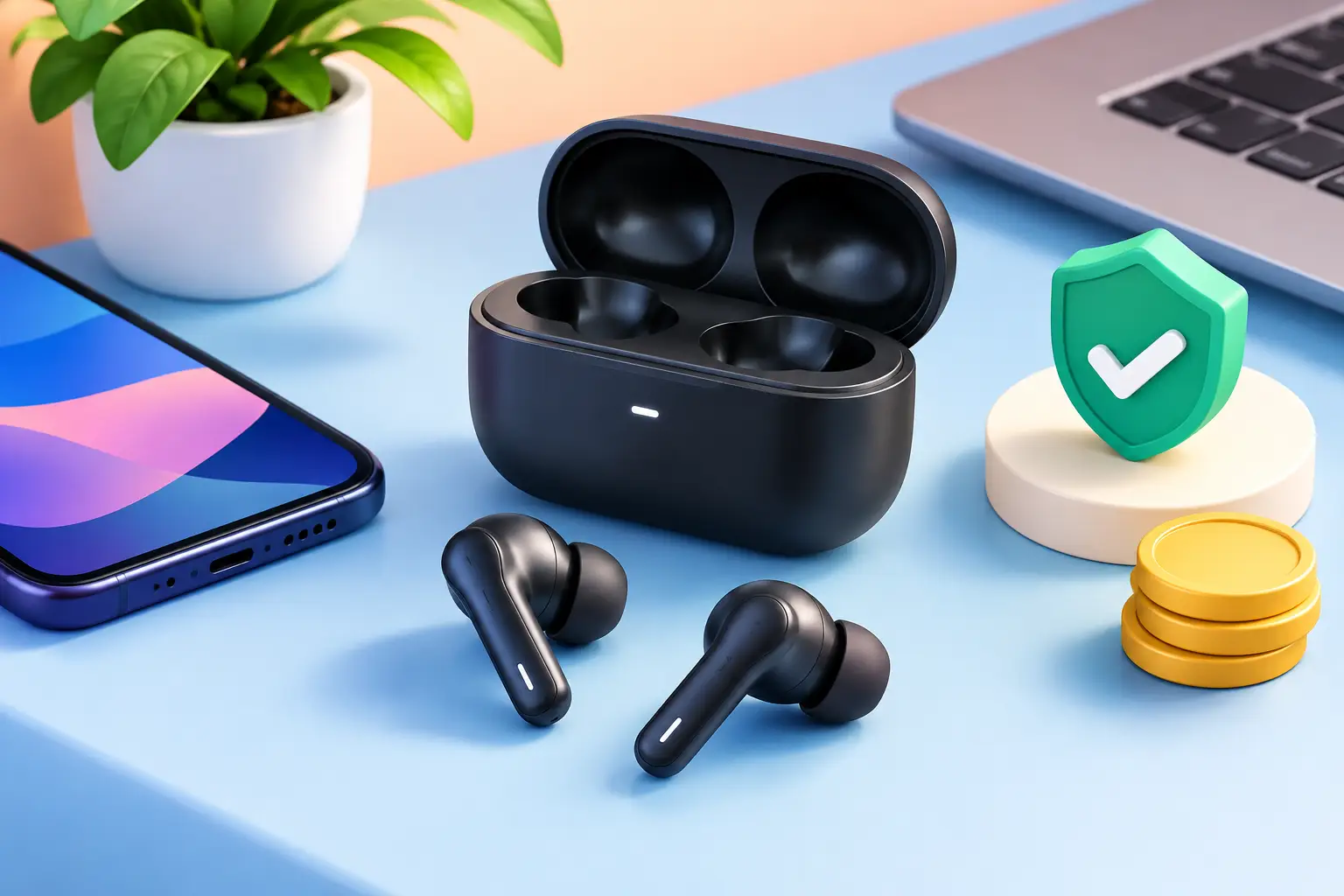
A low price can look brilliant until the earbuds start slipping during a walk, run flat before the afternoon, or make every phone call sound distant. A useful wireless earbuds review should look beyond a long feature list and focus on how a pair performs in ordinary life: commuting, working, exercising, relaxing and taking calls.
For budget-conscious shoppers, the goal is not to pay for features you will never use. It is to find earbuds that feel comfortable, sound clear and last long enough for your day. Here is what genuinely matters when comparing affordable wireless earbuds.
Wireless Earbuds Review: The Features Worth Paying For
The best choice depends on how you plan to use your earbuds. Someone listening to podcasts on the bus has different needs from someone who wants motivating music at the gym or frequent hands-free calls while managing a busy household.
That said, a few areas make a noticeable difference for almost everyone: fit, sound, battery life, call quality and connection reliability. If an affordable pair gets these right, it can offer far better everyday value than a more expensive option with flashy extras.
Comfort and fit come first
Even excellent sound is no help if your earbuds become uncomfortable after half an hour. Look for a compact shape and, where included, several sizes of silicone ear tips. The right tip should create a gentle seal without pressure. This helps the earbuds stay in place and can improve perceived bass by keeping outside noise from taking over.
Earbuds without silicone tips can be convenient for quick use, but their fit is more dependent on ear shape. They may suit people who dislike the feeling of an in-ear seal, though they are usually less secure for running or fast-paced exercise.
For workouts, consider sweat and splash resistance. An IPX4 rating generally means the earbuds can handle sweat and light rain, which is enough for many gym sessions and walks. It does not mean they are designed for swimming or should be rinsed under the tap.
Sound quality should be clear, not just loud
Good budget earbuds do not need huge bass or maximum volume to be enjoyable. A balanced sound is often more useful. Voices should be easy to understand in podcasts and videos, while music should have enough bass to feel lively without hiding vocals and detail.
Be cautious with claims such as “deep bass” if you mainly listen to spoken content. Extra bass can be fun for pop, dance and workout playlists, but it may make dialogue sound thick or less natural. A good all-round pair handles different types of audio without forcing you to keep adjusting the volume.
If the earbuds offer sound modes or an equaliser, treat this as a welcome extra rather than a deciding factor. Simple controls and a sound profile you enjoy from the first listen are usually more valuable than endless settings.
Battery life needs real-world context
Battery claims can be confusing because brands often quote two figures: listening time from the earbuds themselves and the total time available with the charging case. Both are useful, but they answer different questions.
Earbuds offering around five to eight hours per charge will cover many commutes, work sessions and exercise routines. A case that provides several extra charges means you can use them across multiple days before needing a plug socket. Actual battery life may be lower if you listen loudly, make frequent calls or use noise cancelling.
Quick charging can be particularly handy. Even a short charge that gives roughly an hour of playback can save a forgotten commute or a long wait at an appointment. Check whether the charging cable is included and whether the case uses a connection you already have at home, such as USB-C.
Calls can separate a decent pair from a frustrating one
Many affordable earbuds work well for music but struggle with voice calls in busy places. Microphone quality matters if you take calls outdoors, speak to family while cooking, or join meetings from home.
Look for reviews that discuss how the microphones handle wind, traffic and background chatter, rather than relying only on a technical description. Noise reduction for calls can help, but it cannot remove every sound around you. In a quiet room, most earbuds will be acceptable. The real test is whether the other person can still hear you clearly on a windy pavement or near a busy road.
Connection and controls should feel effortless
A stable Bluetooth connection is a basic expectation. Earbuds should pair easily with your phone and reconnect when you take them from the case. Small dropouts may happen in crowded areas with lots of wireless signals, but regular disconnections are a sign to look elsewhere.
Touch controls can be useful for pausing music, changing tracks or answering calls without reaching for your phone. However, overly sensitive controls can cause accidental presses when adjusting an earbud. Physical buttons are less common but can be easier to use when exercising or wearing gloves.
Do You Need Noise Cancelling?
Active noise cancelling, often called ANC, uses microphones and processing to reduce steady outside sounds such as engine hum, air conditioning and train noise. It can make a commute more pleasant and may let you listen at a lower volume.
It is not essential for everyone. Passive noise isolation from a secure ear-tip fit can already make a meaningful difference, especially at home or in a quieter office. At lower price points, a comfortable fit and clear sound may be a better priority than basic noise cancelling that changes the audio balance or adds little benefit.
If you regularly travel by train, fly often or work in a noisy shared space, ANC may be worth spending more on. Many earbuds also include a transparency mode, allowing some outside sound through. This is useful when you need to hear station announcements, speak to someone nearby or stay aware while walking.
How to Compare Value Rather Than Just Price
The cheapest earbuds are not always the best bargain. A pair that costs a little more but offers a stronger case, better battery life and reliable calls may last longer and be used more often. That is better value than replacing an unreliable pair after a few months.
When comparing options, think about the situations that matter most to you. For everyday listening at home, comfort and battery life may lead the list. For exercise, prioritise a secure fit and sweat resistance. For regular calls, look for dependable microphone performance. For commuting, consider noise isolation or ANC.
It also helps to check what is included in the box. Replacement ear tips, a charging cable and clear instructions are small details, but they make the product easier to use from day one. A charging case should close securely and feel practical to carry in a pocket or bag.
At EZ Discount Sales, value means choosing products that fit real routines, not simply choosing the lowest number on the price tag. A sensible purchase should feel easy to use, dependable day after day and worth the money you spent.
Common Mistakes When Buying Wireless Earbuds
One common mistake is choosing based on battery total alone. A case may promise 30 or 40 hours, but if the earbuds only last a short time per charge, they may still interrupt a long journey or shift. Check both figures.
Another is assuming all earbuds fit the same way. Ear shape varies, and a style that is perfect for one person can feel loose or uncomfortable for another. Multiple ear-tip sizes give you a better chance of finding a secure fit.
Finally, do not pay extra for a long list of modes if your main need is straightforward listening. Features such as wireless charging, multi-device pairing and elaborate sound controls can be useful, but only when they match your habits. For many people, clear sound, comfortable wear and a dependable connection are the features that earn their place.
Caring for Your Earbuds
A little care can keep wireless earbuds working well for longer. Wipe the ear tips and charging contacts gently with a dry, soft cloth. Keep the case away from water and avoid leaving it in a very hot car, as heat can affect battery performance.
Store the earbuds in their case when they are not in use. This protects them from dust and makes it less likely that one will be misplaced. If sound becomes quieter, inspect the speaker mesh for earwax or debris and clean it carefully according to the product instructions.
The right pair of wireless earbuds should disappear into your routine: easy to grab, comfortable to wear and ready when you need them. Focus on the features you will use every day, and a well-priced pair can make music, calls and commutes noticeably better without stretching your budget.