


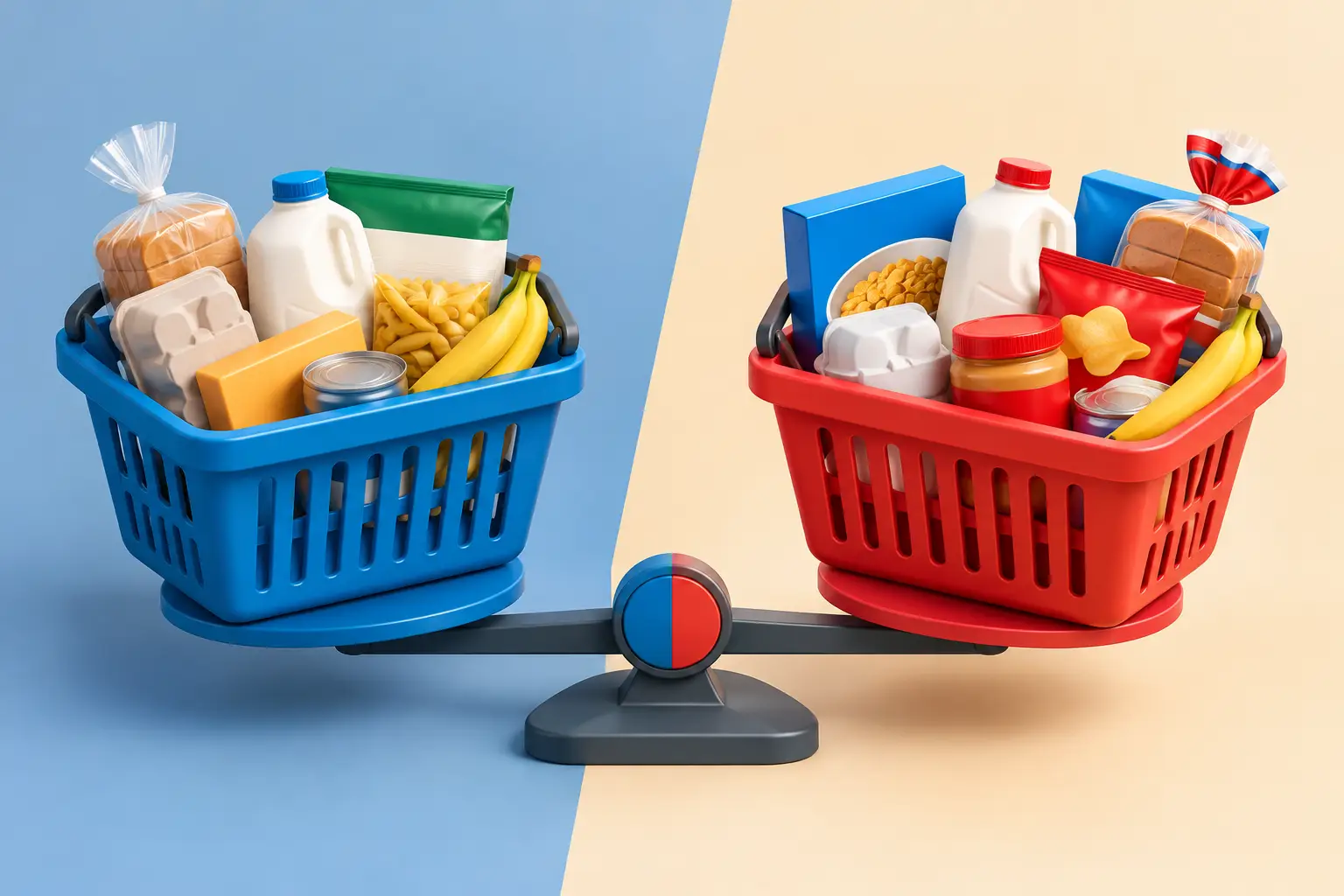
A branded cereal at eye level, a lower-priced own-label box just below it, and a trolley that is already fuller than planned: this is where store brands versus name brands becomes a real household decision. The right choice is not always the cheapest item or the best-known logo. It is the product that does its job, suits your household and makes sensible use of your budget.
For many everyday purchases, store brands can offer very good quality for less. Name brands can also earn their higher price through a formula, fit, flavour or feature that genuinely works better for you. The useful question is not, “Which is always best?” It is, “Where does paying extra make a difference?”
Store Brands Versus Name Brands: What You Are Paying For
Store brands, often called own-label products in the UK, are products made for a particular retailer rather than sold under a nationally recognised brand. They appear across food, cleaning, toiletries, household goods, clothing, gifts and more. Their packaging may be simpler, but that does not automatically mean the item itself is inferior.
Name brands usually carry a familiar name, recognisable packaging and years of marketing behind them. Their price can reflect advertising, product development, specialist ingredients, distinctive design and wider distribution. Sometimes that investment results in a product with a noticeable advantage. Other times, it mainly means you are paying for familiarity.
Neither option deserves blind loyalty. A branded laundry detergent might remove a particular type of stain better in your household. An own-label bin liner may be every bit as strong as the better-known alternative. Products should be judged by performance, ingredients, materials, pack size and unit price, not by the logo alone.
Why Store Brands Often Cost Less
Lower prices are not necessarily a warning sign. Store brands may have fewer advertising costs, simpler packaging and a more focused product range. These savings can be reflected in the shelf price without changing the product’s usefulness.
That can make a meaningful difference on repeat purchases. Saving a small amount on kitchen roll, toiletries, cleaning supplies, snacks and cupboard staples can add up across a month. For families and households managing a regular budget, switching a few low-risk favourites is often easier than making one dramatic cut elsewhere.
Look beyond the headline price, though. A larger branded pack on promotion can sometimes work out cheaper per 100g, per litre, per wash or per item than a smaller own-label pack. The best value is the product you will use fully, at a fair unit price, without needing to replace it sooner than expected.
Check the unit price before deciding
The unit price is one of the quickest ways to compare like with like. A bottle of washing-up liquid may look cheap, but a more concentrated product could last longer. A packet of batteries may cost more initially yet offer better value if they keep devices running for longer.
This does not mean the priciest option wins. It simply stops misleading comparisons between different sizes and strengths. When products are similar, choosing the lower unit price is a practical place to start.
Quality Is More Than the Price Tag
Quality means different things in different categories. With food, you may care most about taste, texture and ingredients. With a phone charger or headphones, safety, compatibility and reliability matter more. For bedding or clothing, fabric feel, stitching, sizing and wash performance often tell you more than a label ever could.
Store brands have improved greatly in many categories because shoppers expect better value, not merely lower prices. Retailers have a strong reason to protect their reputation with dependable own-label products. Still, quality can vary within the same range, just as it can with name brands.
The sensible approach is to test rather than assume. Try an own-label version of one familiar item first. If it performs well, it may become an easy regular saving. If it disappoints, you have learned where the branded version is worth keeping.
Read the details that affect everyday use
For packaged food, compare the ingredient list, allergy information, nutrition panel and serving size. A branded product may have a recipe you prefer, while the store brand may have similar ingredients at a lower price.
For household and personal-care items, check capacity, materials, fragrance, instructions and whether the product is suitable for your needs. Sensitive skin, young children, pets and specific cleaning tasks can change what represents good value. An unsuitable bargain is not a bargain if it sits unused in the cupboard.
With electronics and accessories, check the product description carefully. Consider measurements, connection type, power requirements, included parts and any care guidance. Lower-priced items can be excellent for straightforward jobs, while frequently used or safety-critical products may justify closer scrutiny and a stronger guarantee.
When Name Brands Can Be Worth It
There are times when a name brand earns its place in the basket. Perhaps its flavour is a family favourite and substitutes go to waste. Perhaps a particular shampoo suits your hair, or a cleaning product tackles a stubborn job more effectively. A branded item can also be the better choice when it has a feature that cheaper alternatives do not offer.
Consistency is another valid reason. If you need a product to perform in a very specific way, such as paint that matches an earlier colour, a replacement part with precise sizing, or a formula recommended for a particular purpose, changing brands can create more hassle than it saves.
The key is to pay extra deliberately. Keep branded favourites where the difference is clear to you, rather than treating every familiar name as automatically better. This approach protects both quality and budget.
A Practical Way to Compare Products
Start with items where the risk of disappointment is low. Everyday basics such as tissues, foil, stationery, storage bags, biscuits or simple household accessories are often good places to compare. If the store-brand option works well, you have found a saving without compromising much.
Next, compare your higher-spend repeat purchases. Look at what you buy every week or month, not just occasional treats. One small change to a regularly purchased item can matter more over time than a one-off discount on something rarely used.
Keep the test fair. Use the product as intended and give it enough time, especially for cleaning products, skincare or clothing. Ask practical questions: Did it last? Did it do the job? Would I buy it again at the current price? A simple answer is more useful than assumptions about brand reputation.
It also helps to separate essentials from preferences. There is nothing wrong with buying the branded coffee, sauce or snack you enjoy most. Savings do not have to mean removing every small pleasure. Choosing a lower-cost alternative for the products you feel neutral about can leave more room in the budget for the things you genuinely value.
Avoid the Common Value Traps
A special offer is only useful when it fits your needs. Multi-buy packs can lead to waste, especially with food, toiletries or seasonal items. A low price on an unfamiliar product can be tempting, but check whether it replaces something you already own and use.
Packaging can influence decisions too. Premium-looking boxes, bold claims and prominent labels can make products appear more different than they are. Take a moment to compare specifications and quantity. The quieter option may deliver the same everyday result.
Finally, remember that the lowest price is not always the lowest cost. A poorly made item that breaks early, a cleaning product that requires twice as much per use, or clothing that loses shape after one wash can cost more in the long run. Value comes from useful life as well as the amount paid at checkout.
Build a Basket That Works for You
A balanced household shop often includes both store brands and name brands. Own-label choices can help keep routine costs under control, particularly for basics where performance is comparable. Branded products can remain worthwhile for personal favourites, specialist needs or items where you notice a real difference.
Review your regular purchases from time to time, especially when prices or pack sizes change. Trying one alternative at a time keeps the process simple and avoids filling cupboards with products that do not suit your home.
The best choice is the one you would happily buy again: reliable enough for the task, fairly priced for the amount you receive and suited to the people who use it. A thoughtful swap today can make room in tomorrow’s budget for something that matters more.